Tint car windows percentage tells you how much light can pass through your car windows. A lower percentage means darker tint, and a higher percentage means lighter tint.
If you have ever wondered what tint car windows percentage really means, you are not alone. Window tint percentages help you understand how dark or light your tint will look. For example, 25 percent tint is much darker than 30 percent tint, and 10 percent tint is very dark. These tint levels affect privacy, sunlight, comfort, and how well you can see outside. In this guide, you will learn the most common window tint percentages, how a tint chart for cars works, and how to choose the best tint for your needs.
Now, let us go deeper and explain everything step by step in a simple way.
Tint is a thin film added to car windows. It helps block sunlight, reduces heat, and gives your car a stylish look. But the percentage number is what confuses most people. That number is called VLT, which means Visible Light Transmission. It shows how much light can pass through the glass.
A window tint percentage of 70 percent lets in a lot of light, so it looks light. A tint percentage of 10 percent lets in very little light, so it looks very dark. That is why understanding tint levels is so important before choosing one.
Why Window Tint Percentages Are Not All the Same
Not all window tint percentages feel or look the same. Even small changes can make a big difference. Some people want more privacy, while others want better visibility at night. That is why tint levels are not one size fits all.
Different tint percentages also depend on where the tint is placed. Side windows, back windows, and windshields can all have different rules and comfort levels.
A dark tint percentage may look great, but it can also make driving harder at night. A lighter tint may not give as much privacy, but it can still block harmful UV rays.
This is why many drivers use a window tint comparison chart. It helps you see the difference between car tint levels and pick what works best.
Also, tint film quality matters. Two cars with the same tint percentage can look slightly different depending on glass color and tint type.
Understanding Window Tint Percentage and VLT Basics
Window tint percentage is based on how much light passes through your window. This is called VLT.
Here is a simple way to think about it:
- Higher percentage = more light passes through = lighter tint
- Lower percentage = less light passes through = darker tint
For example:
- 50 percent tint lets in half the light
- 25 percent tint lets in only one quarter of the light
- 10 percent tint lets in very little light
That is why car tint percentages are so useful. They help you compare tint levels clearly.
Many people ask, “How dark is 10 percent tint?” The answer is very dark. It gives strong privacy, but it can be harder to see through at night.
Understanding window tint percentages helps you make a smart and safe choice.
Tint Levels Chart, A Quick Guide to Common Options
A tint levels chart is one of the easiest tools for learning. It shows the most common window tint levels and what they mean.
Here are popular tint levels:
- 70 percent: Very light tint, almost clear
- 50 percent: Light shade, still easy to see through
- 35 percent: Medium tint, common for front windows
- 30 percent: Darker look with good balance
- 25 percent: Noticeably dark, more privacy
- 20 percent: Very dark tint
- 15 percent: Deep shade, harder to see in
- 10 percent: Very dark, strong privacy
- 5 percent: Limo tint percentage, almost black
A window tint levels chart helps you understand different tint percentages quickly. It also helps when choosing tint for daily driving.
Car Tint Percentages Chart, What Each Shade Looks Like
A car tint percentages chart gives you a visual idea of how each tint looks on a car. Many people ask, “What does 30 tint look like on a car?”
30 percent tint looks dark, but you can still see inside during the day. It is one of the most popular options.
Here is a simple tint darkness scale:
- 50 percent: Light shade
- 35 percent: Medium shade
- 25 percent: Dark shade
- 10 percent: Very dark shade
- 5 percent: Limo tint
A tint darkness chart helps drivers compare options before they buy.
Remember, darker tint gives more privacy, but lighter tint gives better night visibility.
Using a window tint chart is the best way to avoid surprises after installation.
Different Tint Percentages, From Light to Dark Tint Options
There are many different tint percentages available. Choosing one depends on your goals.
Light tint options include:
- 70 percent
- 50 percent
These are great for reducing glare while keeping windows bright.
Medium tint options include:
- 35 percent
- 30 percent
These give a stylish look and moderate privacy.
Dark tint options include:
- 25 percent tint
- 20 percent
- 15 tint
These offer strong privacy and a bold appearance.
Very dark tint options include:
- 10 percent tint
- 5 percent limo tint percentage
These are mostly chosen for maximum privacy.
Different window tint percentages serve different needs. Some people want comfort from heat, while others want the darkest look possible.
A tint chart for cars helps you decide with confidence.
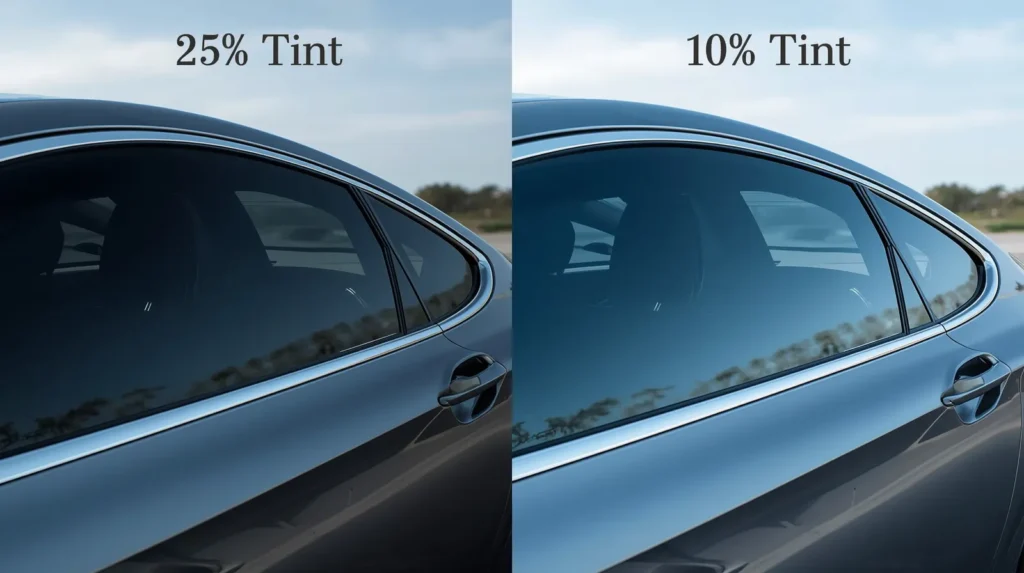
25 Percent Tint vs 10 Percent Tint, Which One Feels Darker
This is one of the most common questions.
25 percent tint is dark, but 10 percent tint is much darker.
Let us compare:
- 25 percent tint: You can still see inside a little during the day
- 10 percent tint: Very hard to see inside, strong privacy
So, how dark is 10 percent tint? It is close to blackout. It looks bold, but it can reduce visibility at night.
25 percent tint is often a safer balance. It gives privacy but still allows decent vision.
If you want a tint that looks dark but stays practical, 25 percent tint is a popular choice.
A window tint comparison chart makes these differences easier to understand.
15 Tint vs 20, and 20 vs 30 Window Tint Differences
Small number changes can create big visual differences.
15 tint vs 20:
- 20 percent tint is dark
- 15 percent tint is even darker
The difference may not seem huge, but it matters for privacy.
20 vs 30 window tint:
- 30 percent tint gives a balanced look
- 20 percent tint gives deeper shade and more privacy
Many drivers choose 30 percent for daily use. Others prefer 20 percent for a darker style.
Different tint percentages should always be chosen based on comfort, safety, and local rules.
Limo Tint Percentage and the Tint Darkness Scale Explained
What percentage is limo tint?
Limo tint percentage is usually 5 percent. This is the darkest tint level commonly available.
It allows only a tiny amount of light through. That is why it looks almost black.
Limo tint is popular for:
- Maximum privacy
- Luxury style
- Rear windows in SUVs
But it can make nighttime driving harder. It is usually not recommended for front windows.
The tint darkness scale helps show where limo tint fits. It is the darkest option on most tint charts.
Always check legal limits before choosing limo tint.
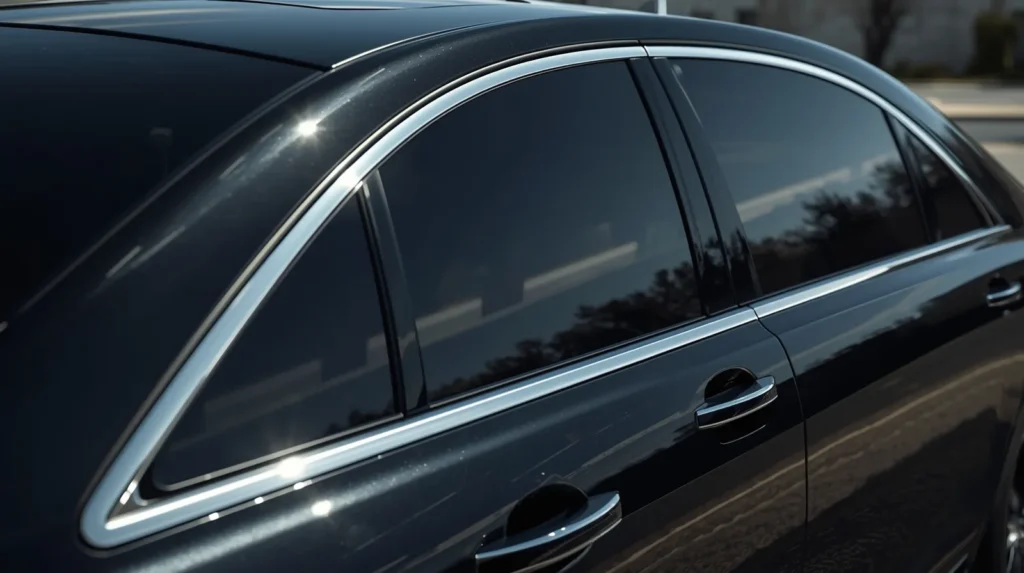
Window Tint Comparison Chart for Windshields and Side Windows
Tint choices depend on window position.
Side windows often use:
- 35 percent
- 30 percent
- 25 percent
Rear windows may use darker tint like:
- 20 percent
- 15 percent
- 5 percent limo tint
Windshields usually need lighter tint for safety.
A window tint comparison chart helps you plan a full tint setup.
Many drivers want privacy on the sides but clear vision in front. That is why mixed tint levels are common.
If you are unsure, a professional shop can guide you.
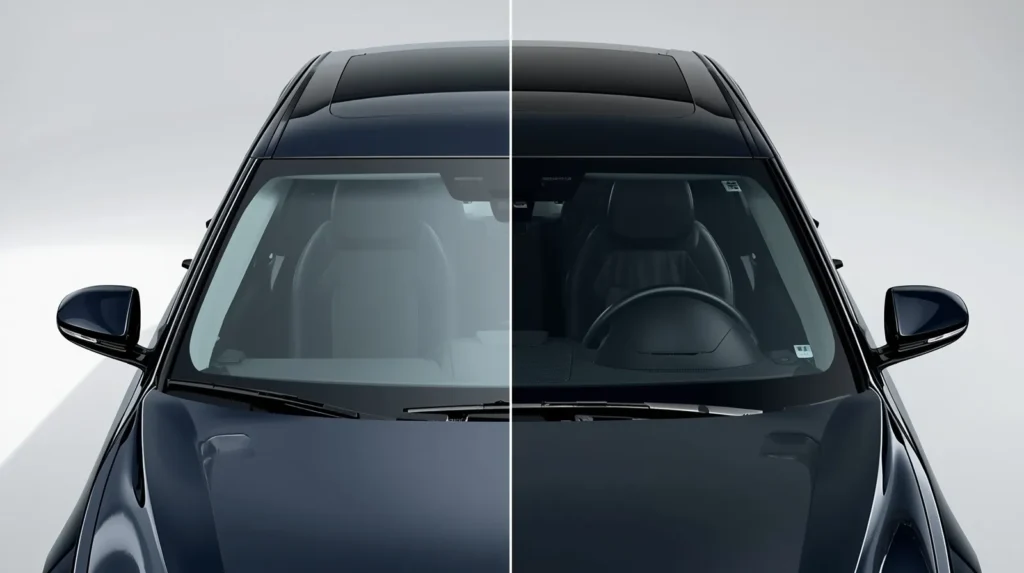
Professional Window Tinting in Farmington Hills by Rive Autohaus
Choosing the right tint is not only about style. It is about comfort, safety, and quality work.
At Rive Autohaus, we help drivers understand window tint percentages clearly. We explain tint levels, show charts, and help you choose what fits your needs.
Our team has real experience with car tint levels, from light shades to limo tint percentage options. We focus on clean installation, long-lasting film, and great results.
When tint is done correctly, it improves your driving comfort and protects your interior from sun damage.
Rive Autohaus is proud to offer expert window tint services with care and trust.
Conclusion
Window tint percentages are simple once you understand them. A higher percentage means lighter tint. A lower percentage means darker tint. Tools like a car tint percentages chart and tint darkness scale help you compare options like 25 percent tint, 10 percent tint, or even limo tint percentage.
The best choice depends on your comfort, privacy goals, and visibility needs. With the right tint level, your car can look better, feel cooler, and protect you from harsh sunlight.
If you are ready to choose the perfect tint, reach out today and get expert help from a trusted team. We would love to help you upgrade your ride with the right window tint solution.